The Future of Construction Risk, Insurance and Resilience
The inaugural Arch Construction Risk Report draws on insights from leading property owners, developers and contractors worldwide to examine the trends reshaping project delivery, risk management and insurance across the global construction sector.
An Interconnected Risk Environment Increasing in Complexity
Research findings reveal a global construction sector operating in an increasingly complex and challenging environment. Risk conditions have deteriorated and the operating environment has become more demanding.
Key Findings:
- 85% of organisations reported an increase in risk exposure over the past 12 months.
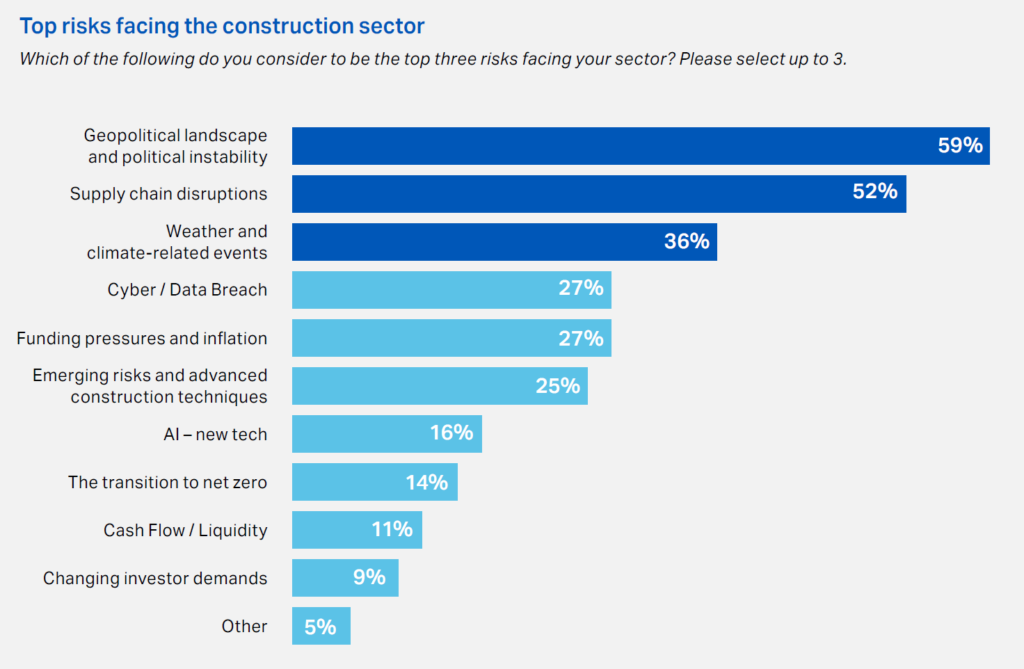
- 59% identified geopolitical instability as the most significant risk facing the sector, followed by supply chain disruptions (52%) and weather and climate-related risks (36%).
- Smaller turnover businesses appear to be experiencing the increase in risk exposure more acutely.
“The findings point to a clear evolution in the risk landscape facing construction projects, highlighting the need for organisations to reassess both their risk management and insurance strategies. Geopolitical tensions, climate-related events, supply chain disruptions, emerging risks and persistent inflation are combining to create an increasingly complex environment for project delivery.”

Tim Chapman
Head of Construction
Rising Exposure Driving Increased Resilience Investment
Despite growing challenges, construction organisations are responding proactively, strengthening resilience through incremental investment in insurance and risk control measures.
Key Findings:
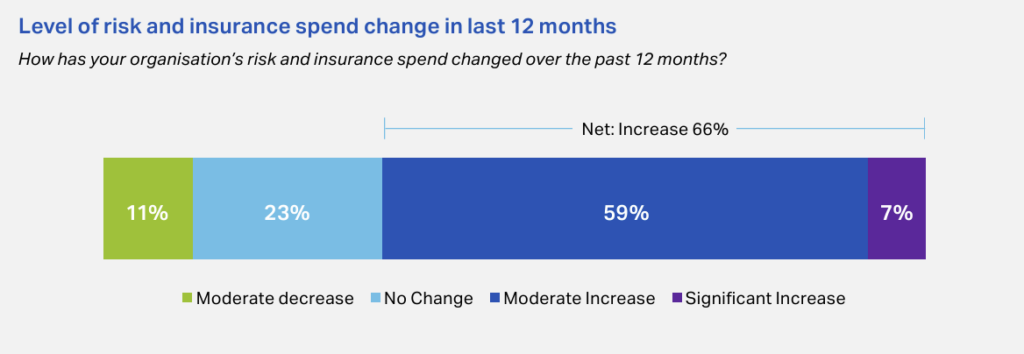
- 66% of respondents reported increasing their risk and insurance expenditure during the past year.
- 72% increased their project contingency allowances during the past five years.
- 78% described insurance availability as influential in driving access to external funding.
“As the risk landscape continues to evolve, closer collaboration between insurers, brokers and clients is critical to successfully navigate uncertainty. With earlier engagement and embedding resilience into every stage of project planning and delivery, the industry can continue to adapt, embrace innovation and build a more robust future.”
— Tim Chapman