Workplace transport is one of the most significant, and often underestimated sources of risk for businesses across a wide range of sectors. From warehouses and courier depots to builders’ merchants and commercial premises, the movement of vehicles and mobile plant creates hazards that can have serious consequences for employees, contractors and visitors alike.
According to the HSE, there were 147 workplace fatalities in 2023 – 2024, with 30 — nearly one in five — involving a person being struck by a moving vehicle. Only falls from height account for more deaths. For your clients, understanding and actively managing these risks isn’t just good practice; it’s a legal obligation.
The Legal Duty
Employers are legally required to protect the health, safety and welfare of everyone on their premises — employees, contractors, visitors and delivery drivers alike. Key legislation includes the Health and Safety at Work Act 1974, the Management of Health and Safety at Work Regulations 1999, the Provision and Use of Work Equipment Regulations (PUWER) 1998, and the Working at Height Regulations 2005. Where multiple employers share a site, they must coordinate to ensure all duties are met collectively.
Where the Risks Lie
Transport-related incidents fall into two broad categories. The first involves vehicle movement – the most serious risks arising where vehicles or mobile plant interact with pedestrians in shared spaces. The five most common accident types are:
- being struck by a moving vehicle,
- vehicle collapse or overturn,
- falling from a vehicle,
- being hit by a falling load,
- and being struck against a fixed object whilst travelling.
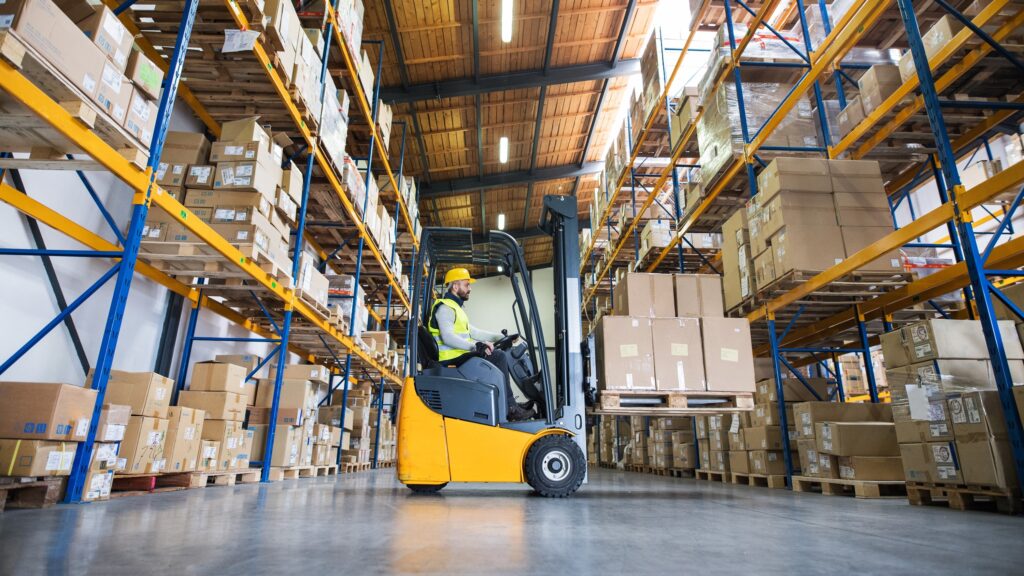
Fork-lift trucks (FLTs) deserve particular attention, featuring prominently in thousands of reportable injuries each year. Common causes of FLT overturns include excessive speed, driving across slopes, sudden braking, under-inflated tyres and travelling with a load incorrectly positioned or elevated.
The second category covers non-movement hazards — injuries that occur during loading and unloading, securing and sheeting loads, trailer coupling and vehicle maintenance. These carry a serious risk of falls from height, injuries from falling loads, or being struck by a vehicle that moves unexpectedly during these operations.
Key Controls to Recommend to Clients
A formal, documented risk assessment for all vehicle movements on site is the essential starting point. From there, a robust safe system of work should cover the following areas:
Traffic Management & Segregation
- Clearly marked pedestrian and vehicle routes, with barriers and raised kerbs to physically separate the two wherever practicable
- One-way traffic systems where possible, to reduce reversing manoeuvres
- Designated parking, loading and unloading areas with appropriate signage
- Site speed limits of 10–15 mph and adequate lighting throughout
Visitor & Driver Safety
- All visitors and delivery drivers directed via safe, designated routes
- A safe waiting area for drivers not involved in loading or unloading operations
- Documented site rules issued to all visitors on arrival
Fork-Lift Truck (FLT) Controls
- FLT operation restricted to trained and certificated operatives, with regular refresher training
- Daily pre-use checks of brakes, forks, seat belts, tyres and warning devices
- Keys secured when FLTs are not in use and all standard vehicles to reverse into spaces
Loading and Unloading Operations
- Safe access ladders and nonslip surfaces at load areas, with fall arrest systems where edge protection isn’t practicable
- Vehicle restraints or wheel chocks to prevent vehicles departing bays whilst still being loaded or unloaded
- Hi-vis clothing worn by all personnel in vehicle operating areas
Further guidance is also available from the HSE at www.hse.gov.uk/pubns/indg199.pdf.
This article has been prepared by Arch Insurance (UK) Ltd for general information purposes only and does not constitute legal or professional advice.