Our Arch Insurance’s Surveyors’ Newsletter brings you the latest risk management developments, industry news and guidance relevant to our brokers and clients.
Vaping Industry Responds to Glasgow Blaze
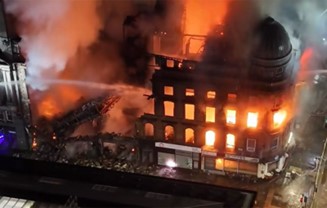
Following the devastating fire on Union Street, Glasgow on 8th March, the UK Vaping Industry Association has taken proactive steps, writing to fire and rescue services across the UK to address the risks associated with vaping products. For a detailed overview of the incident and its implications, we recommend reading the full article published by the Fire Protection Association.
Lithium-Ion Battery Fires: Webinar & Research
Hawkins Forensic Investigation Webinar – 28th May
Hawkins Forensic Investigation is hosting a webinar on 28th May exploring lithium-ion battery chemistries, failures and fires – a topic of growing importance across multiple industries. Registration is free and open to all.
Hawkins has also published a recent article examining the fire and explosion risks associated with additive manufacturing, including 3D printing – a sector where awareness of these hazards remains critical.
New Fire Classification for Lithium-Ion Batteries
A significant development in fire safety standards: BS ISO 3941:2026 ‘Classification of Fires’ has introduced a new Class L classification, specifically covering fires involving lithium-ion batteries and cells (excluding those containing lithium metal). These are most commonly secondary, rechargeable battery types.
The revised standard recognises that lithium-ion battery fires exhibit a distinct set of behaviours that set them apart from traditional fire classes:
- High energy density, leading to rapid heat release and accelerated fire growth
- Thermal runaway, with fire propagating from cell to cell
- Venting of toxic and flammable gases
- Risk of explosion
- Limited access due to battery construction
- Projectile hazards from expelled cells and burning electrolyte
- Stranded electrical energy, creating the potential for delayed reignition
The introduction of Class L reflects the increasingly widespread use of lithium-ion batteries across the built environment – from electric vehicles and personal mobility devices to energy storage systems, portable tools and consumer electronics. Businesses and risk managers should familiarise themselves with these updated classifications and review their fire risk assessments accordingly.
Further reading is available via the IPS Fire & Security blog.
Solar Panel Fire Spread: New Research Findings
A series of large-scale experiments, commissioned by the Building Safety Regulator, has raised important concerns about the fire performance of solar photovoltaic (PV) panels installed on pitched roofs. As solar adoption continues to accelerate, these findings carry significant implications for property risk assessments and underwriting considerations. The full findings are available via the Fire Protection Association.
Subsidence Guidance: A Practical Resource
For those dealing with subsidence and heave, whether in the context of claims, surveys or risk management – Catalyst Services UK has produced a comprehensive three-part guide series covering investigation, monitoring and remediation:
- Understanding Subsidence and Heave Subsidence service guide – Part 1 – Catalyst
- Investigation and Monitoring Subsidence service guide – Part 2 – Catalyst
- Remediation Subsidence service guide – Part 3 – Catalyst
All three guides are available to download free of charge, directly from their website.
Safe Use of Metalworking Lathes: An Important Reminder
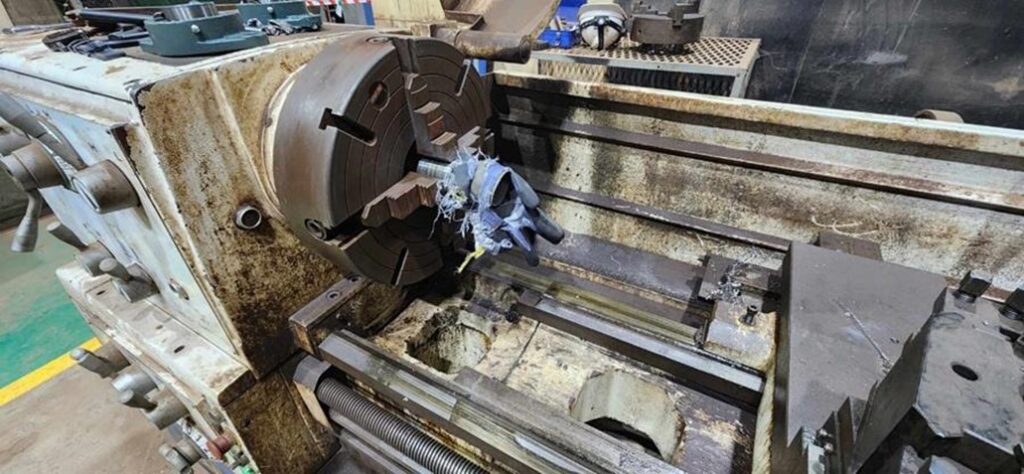
Recent Health & Safety Executive (HSE) prosecutions have brought renewed attention to the dangers of using emery cloth on metalworking lathes – with serious and, in one case, fatal consequences:
- Forging company fined over death of employee entangled in lathe
- Machine manufacturer fined after lathe incident leaves employee with finger amputated
These cases serve as a stark reminder: it is never acceptable to apply emery cloth by hand to a rotating component. The risk of entanglement or being drawn into the machine is severe.
Key control measures for safe working with lathes are set out in HSE publication HSG129 ‘Health and safety in engineering workshops’, which we strongly encourage all relevant businesses to review and act upon.